This glossary is designed for engineers, architects and technical decision makers working on Industrial IIoT, data acquisition and SCADA projects.
Each term is explained in concise, practical language, with just enough context to clarify why it matters for reliability, latency, maintainability and cybersecurity.
You can skim alphabetically or search within the page for a specific acronym or concept. When a term is central to a broader topic, you will often find a link to a deeper guide or article.
How to get the most from this page:
- Clarify unfamiliar acronyms before meetings or vendor calls.
- Use it as a shared reference when aligning IT, OT and management stakeholders.
- Bookmark it and return as your IIoT and data acquisition roadmap evolves.
The definitions below focus on how each term is used in real industrial environments, rather than in purely academic contexts.
Where helpful, the definition includes why the concept matters when you design architectures, select technologies or plan migrations from brownfield systems.
| Term | Definition |
|---|---|
| Actuator | A device that physically changes a process variable (for example opening a valve or starting a motor) based on commands from a controller such as a PLC or DCS. |
| Cloud | Computing and storage resources delivered by external providers over the internet, used in IIoT to aggregate data, run analytics and integrate with business systems. |
| Data acquisition (DAQ) | The process of collecting, conditioning and digitizing signals from sensors, PLCs and other devices so they can be stored, visualized and analyzed. |
| Determinism | The property of a network or control system to deliver data or execute actions within a guaranteed, bounded time, which is critical for real-time control. |
| DCS (Distributed Control System) | A control system architecture used mainly in process industries, where controllers are distributed but coordinated for continuous control of large plants. |
| Digital twin | A virtual representation of a physical asset or process that is kept in sync with real-time data to support simulation, optimization and what-if analysis. |
| DMZ (Demilitarized Zone) | A network segment placed between IT and OT networks to limit and monitor traffic, reducing the risk of cyber threats spreading across environments. |
| Edge computing | Processing and filtering data close to where it is generated (for example in gateways or industrial PCs) to reduce latency, bandwidth and cloud dependency. |
| Gateway | A device or software component that connects different networks or protocols, often translating between OT protocols (such as Modbus) and IT-friendly interfaces (such as MQTT or HTTPS). |
| Historian | A time-series database optimized for storing and querying industrial process data, often integrated with SCADA and reporting tools. |
| Industrial IoT (IIoT) | The use of connected sensors, devices, networks and analytics to monitor, optimize and control industrial assets and processes across the OT and IT boundary. |
| ISA-95 | An international standard that defines functional levels and interfaces between enterprise systems (such as ERP and MES) and control systems. |
| IT / OT convergence | The process of aligning information technology (IT) and operational technology (OT) systems, teams and processes so data can flow securely and reliably end to end. |
| Latency | The time it takes for data or a command to travel from source to destination, which directly affects responsiveness of dashboards, alarms and control loops. |
| MES (Manufacturing Execution System) | A system that coordinates and monitors manufacturing operations, often consuming data from SCADA, historians and IIoT platforms. |
| Modbus | A simple, long-standing industrial protocol used to exchange data between PLCs, sensors and supervisory systems, available in serial and TCP variants. |
| MQTT | A lightweight, publish-subscribe messaging protocol widely used in IIoT for efficient, scalable and firewall-friendly data transfer. |
| OEE (Overall Equipment Effectiveness) | A composite KPI that combines availability, performance and quality to measure how effectively equipment is being used. |
| On-premises | Infrastructure and software deployed within your own facilities, typically under your direct control and subject to your internal network and security policies. |
| OPC UA | A platform-independent, secure industrial communication standard that provides rich information modeling and interoperability across vendors. |
| OT (Operational Technology) | Hardware and software that directly monitors or controls industrial equipment and processes, such as PLCs, DCSs, SCADA and field devices. |
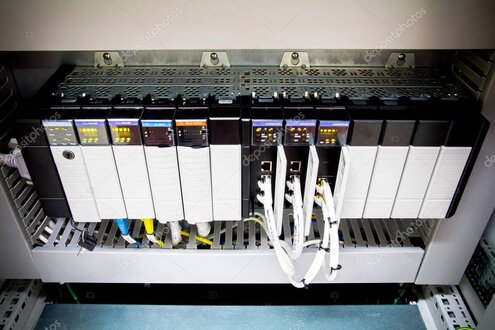
| PLC (Programmable Logic Controller) | A ruggedized industrial controller used to execute logic and sequence operations for machinery and processes. |
| Protocol | A defined set of rules that governs how data is formatted, transmitted and interpreted between devices and systems. |
| Redundancy | The use of duplicated components (such as networks, servers or controllers) so that if one fails, another can take over without losing critical functionality. |
| SCADA (Supervisory Control and Data Acquisition) | A system that provides centralized monitoring, control, alarming and visualization of distributed industrial assets and processes. |
| Sensor | A device that measures a physical quantity (for example temperature, pressure or vibration) and outputs a signal that can be acquired by DAQ or control systems. |
| Tag | A named data point in SCADA, historians or IIoT platforms that represents a specific measurement, status or control variable. |
| Time-series data | Data points recorded over time with associated timestamps, commonly used for trends, analytics and anomaly detection in industrial systems. |
| Edge gateway | An industrial device that combines connectivity, protocol conversion and edge computing capabilities to bridge field devices with higher-level systems. |
This glossary is intentionally opinionated and biased toward what matters in real projects: interoperability, maintainability, security and lifecycle cost.
If a term is widely used but has multiple meanings, the definition focuses on the usage that is most practical for industrial engineers and project leads.
New terms are added over time as technologies and patterns evolve.

Many of the glossary terms above are explored in more depth in articles and guides.
- For strategic roadmaps, see the Industrial IIoT Strategy posts.
- For architectures and patterns, see the Data Acquisition & SCADA and Edge Computing & Connectivity posts.
You can browse all articles from the main Blog page.
If you are missing a term, disagree with a definition or want help applying these concepts to your plant, feel free to reach out.
Short context about your environment (industry, main control systems, current challenges) makes it much easier to provide a useful answer or recommendation.